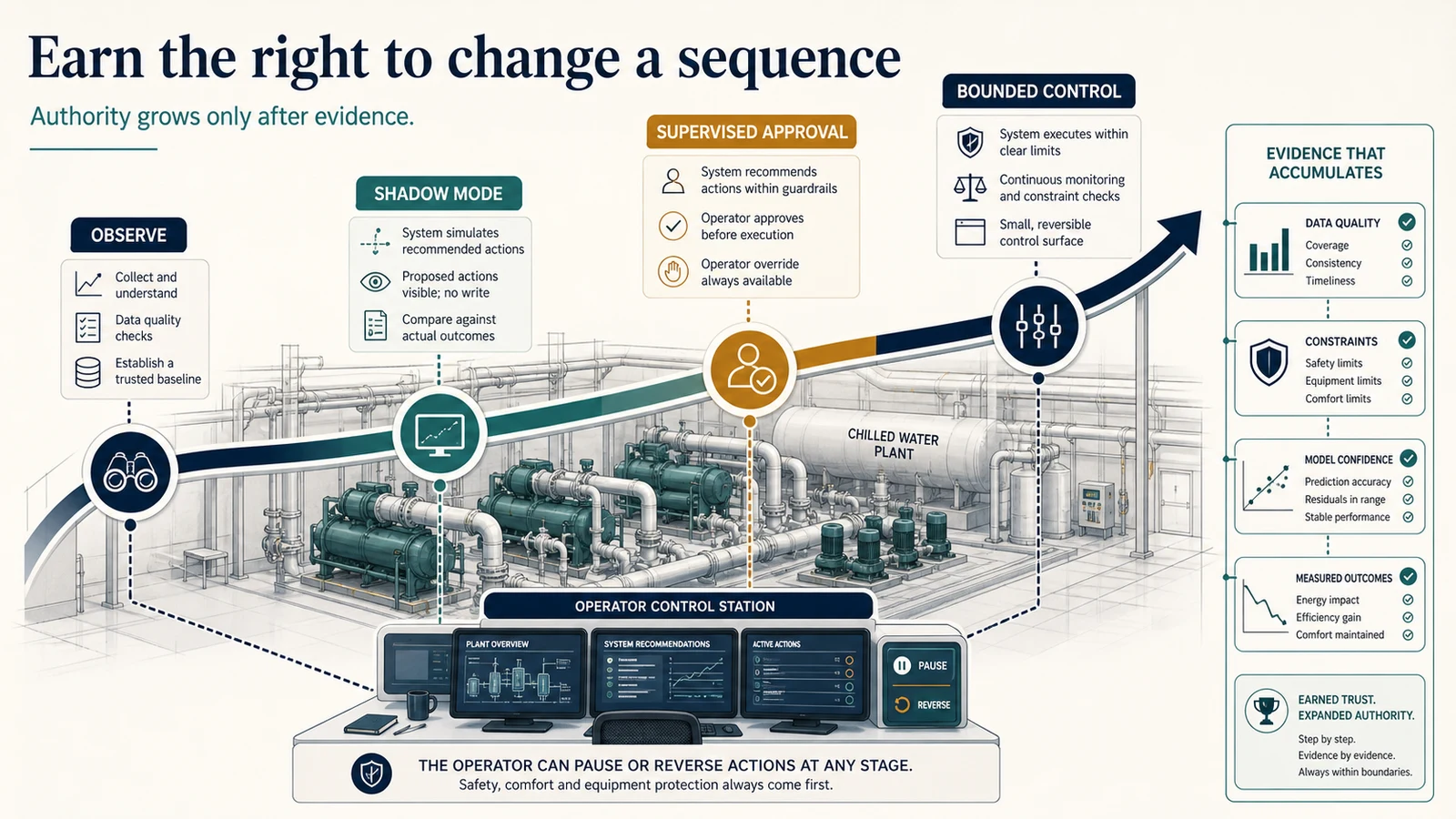
The first job of HVAC AI is to stay reversible
May 14, 20265 min read
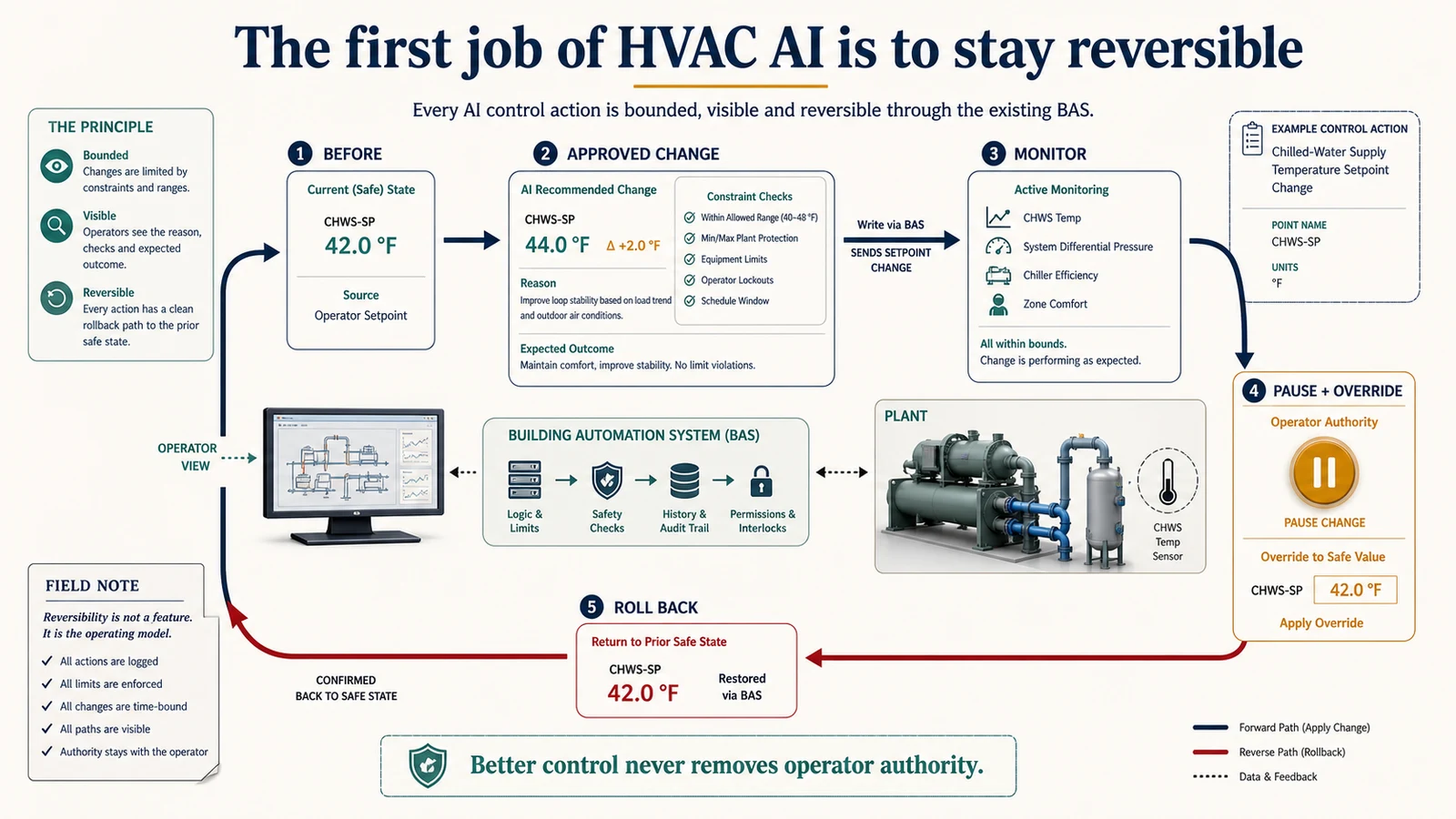
AI HVAC optimization earns control authority by keeping every action bounded, visible, reversible, and grounded in the existing BMS operating model.
Field Notes
AI HVAC optimization earns control authority by keeping every action bounded, visible, reversible, and grounded in the existing BMS operating model.
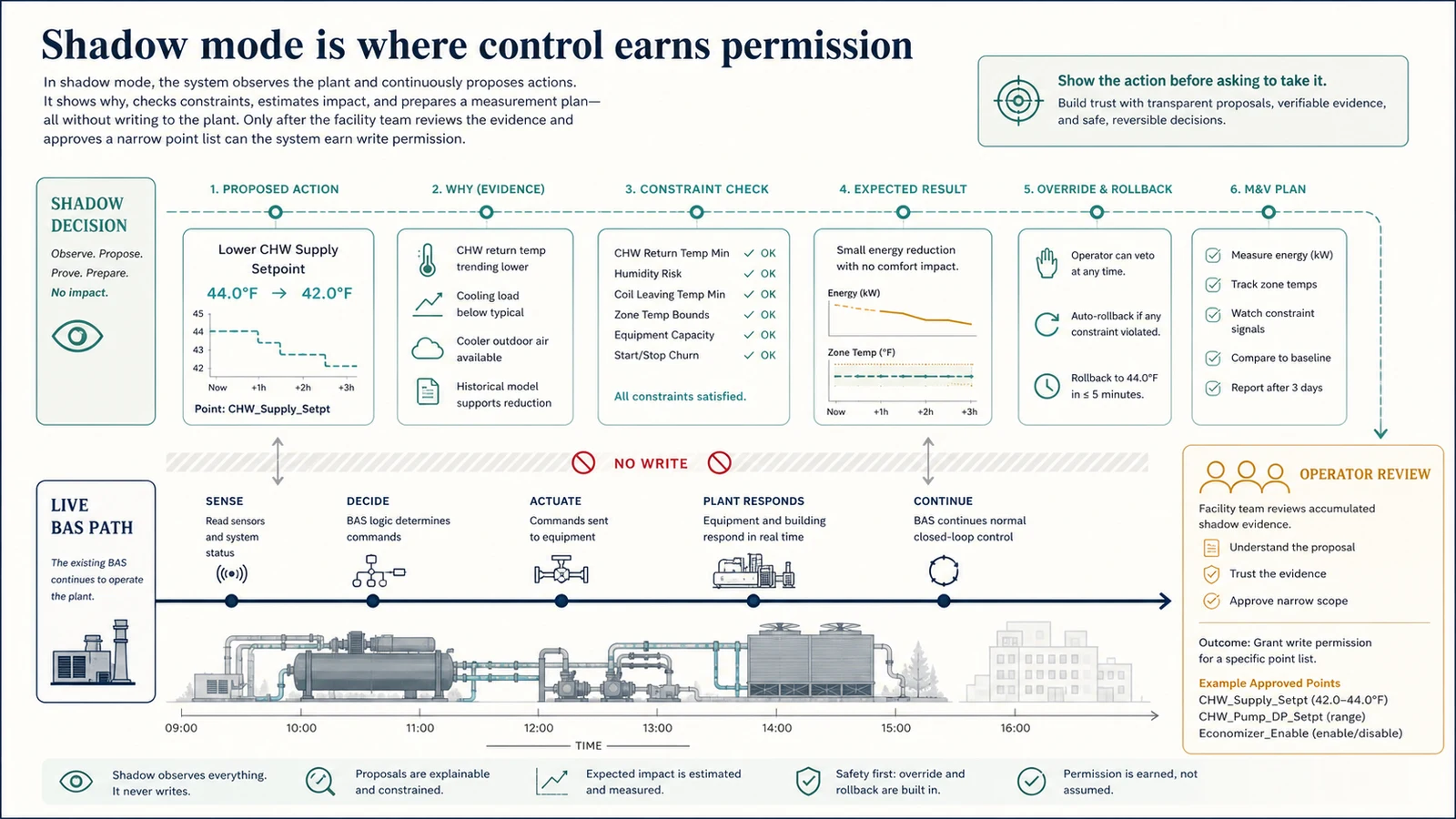
Shadow mode lets facility teams inspect proposed HVAC actions, constraints, rollback behavior, and measurement evidence before granting supervisory write permission.
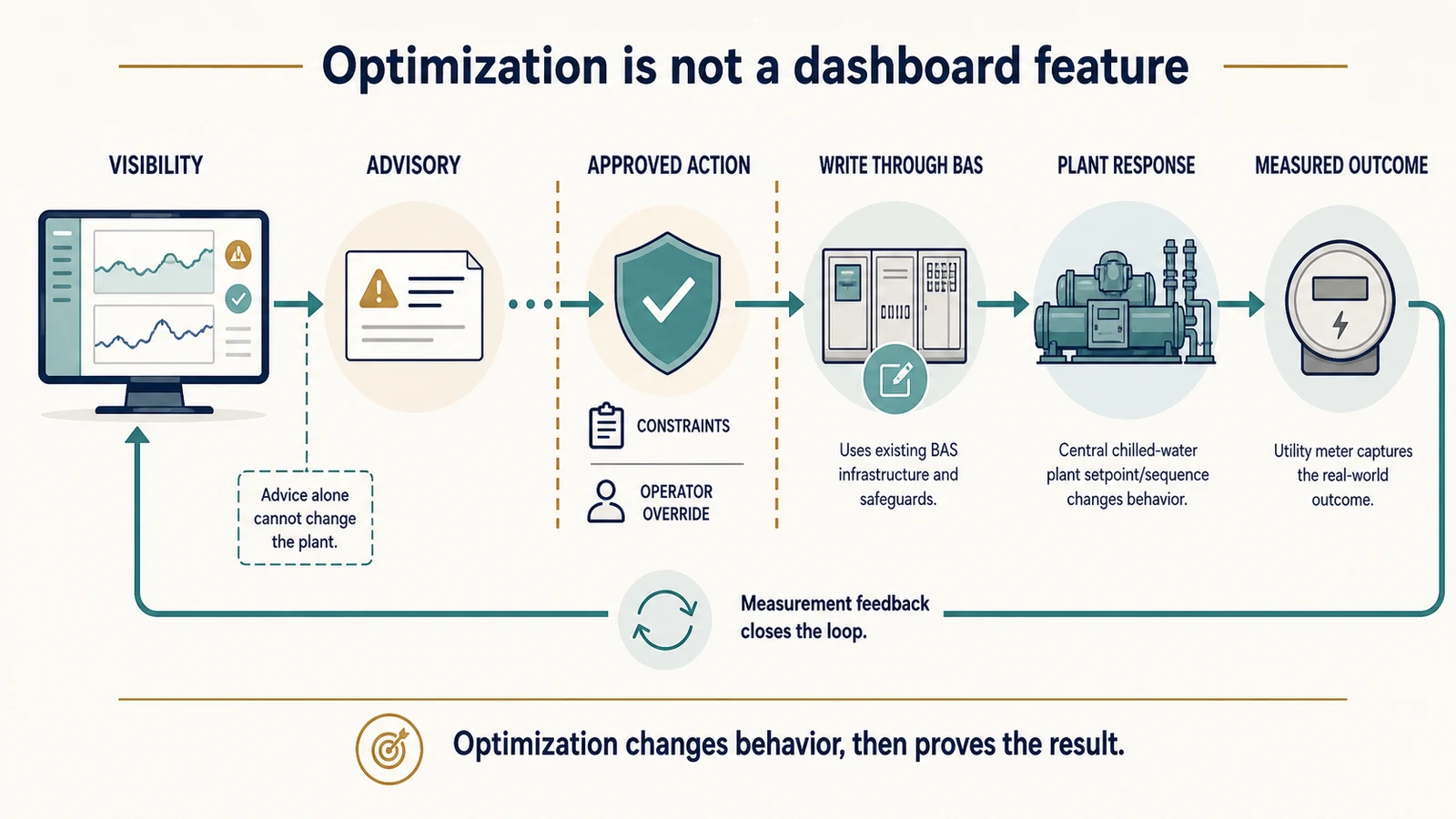
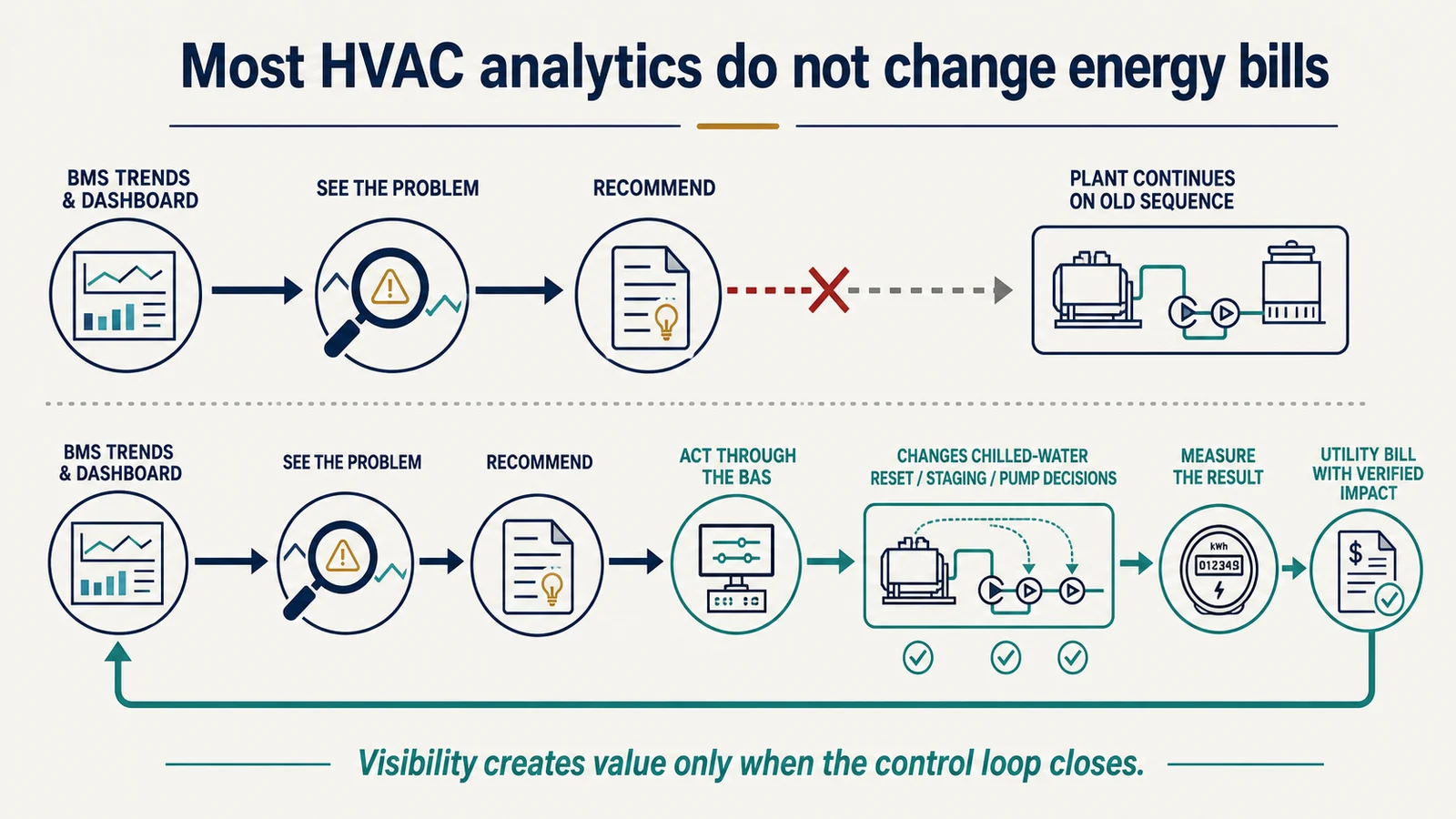
Dashboards can make HVAC inefficiency visible. Real optimization starts when software can safely change plant behavior through the existing BMS, inside an approved control envelope.
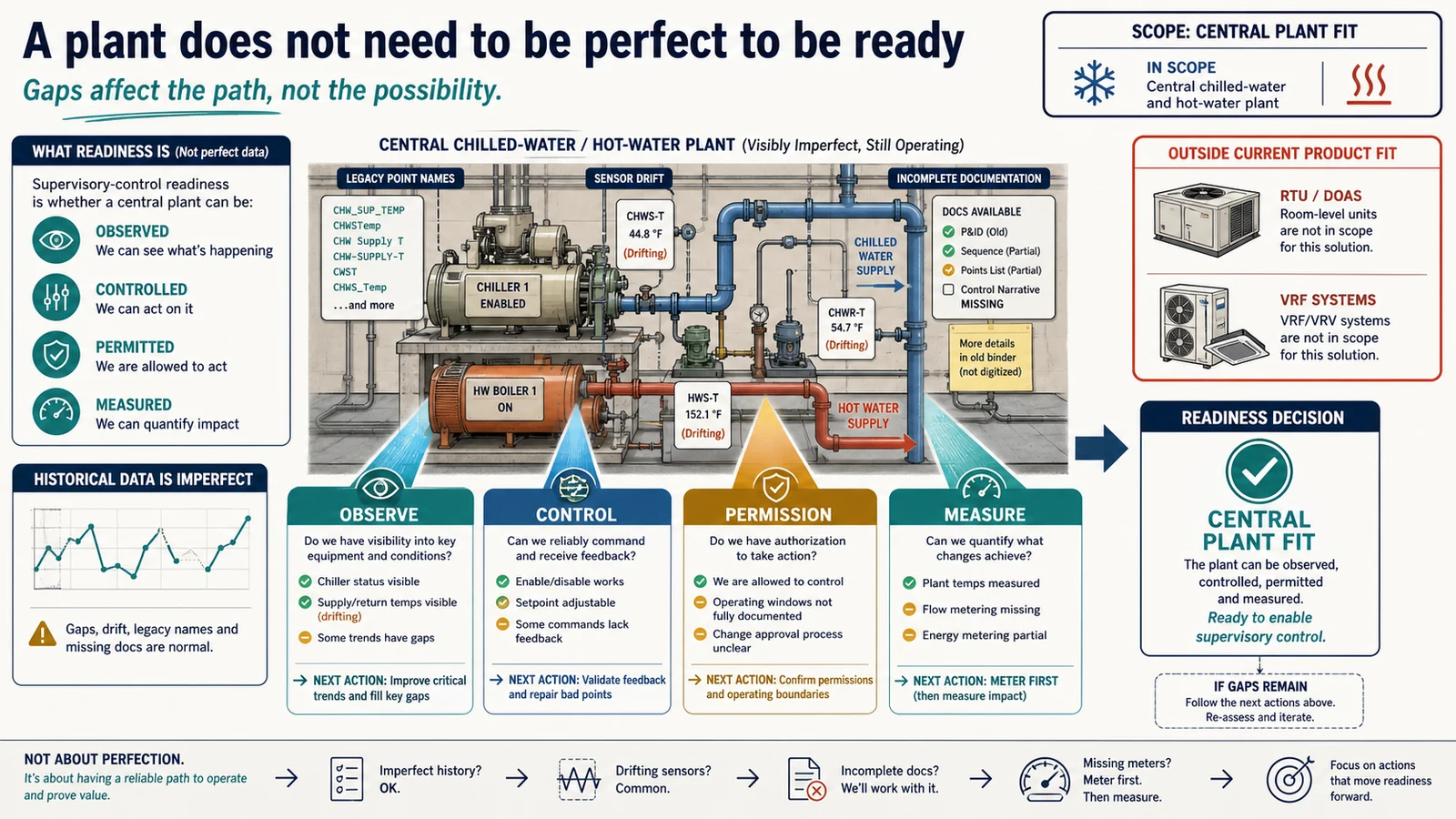
The readiness question for AI HVAC optimization is not whether historical data is perfect. It is whether the plant can be observed, controlled, permitted, and measured.
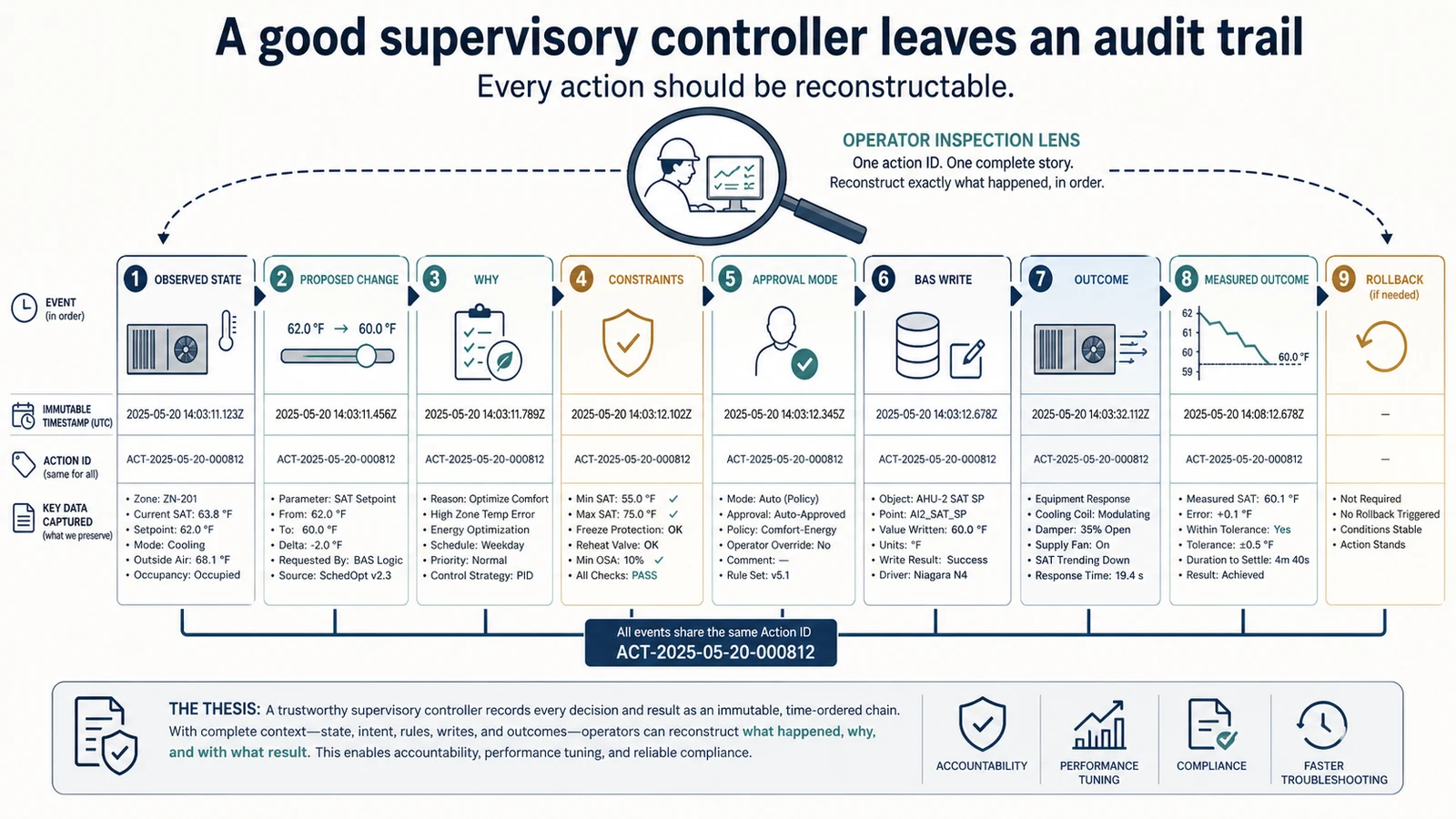
If AI adjusts HVAC plant behavior, operators need to know what changed, why it changed, which constraints were checked, and how to reverse it.
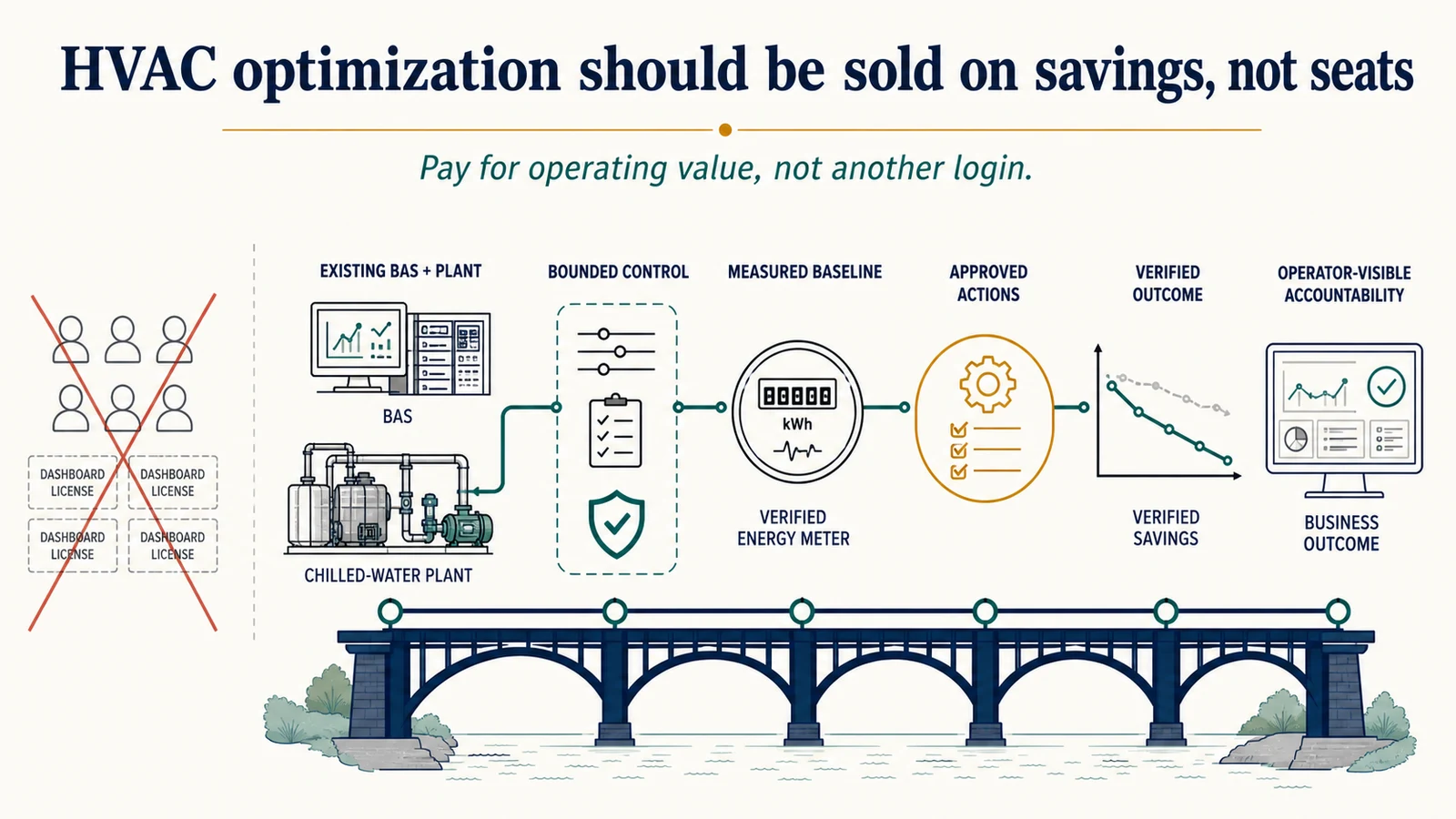
The outcome of HVAC optimization is not another dashboard. It is lower utility bills, a better-running plant, and accountability tied to measured performance.
Visibility is useful, but energy bills move when recommendations become safe, accepted, operator-visible control actions.
In a real building, the first optimization question is not mathematical optimality. It is what the system is allowed to change safely.
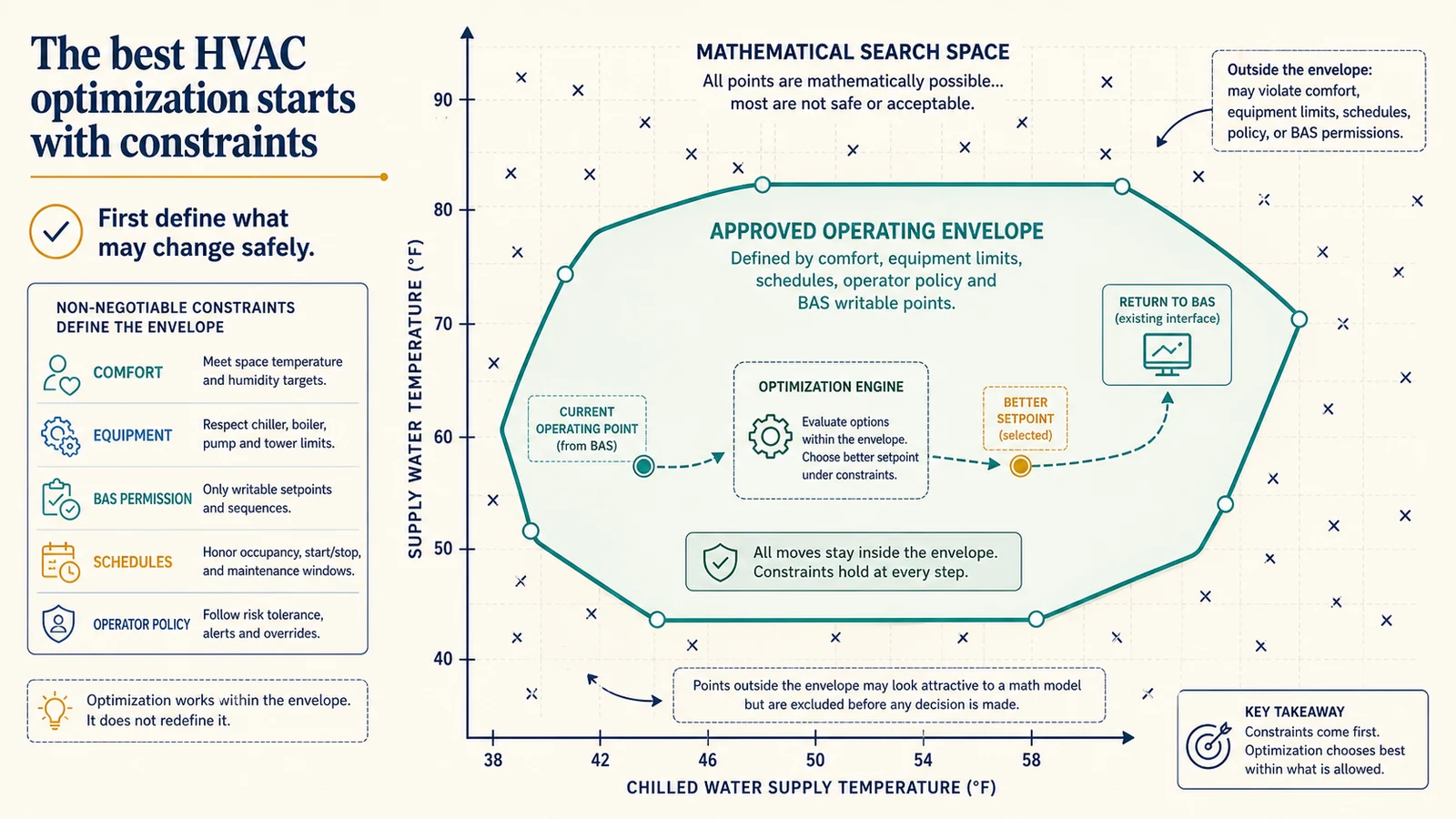
Facility teams are not rewarded for clever risks. AI HVAC optimization has to prove it understands the building before asking for control authority.