Not All Building Data Is Highly Sensitive
Jul 27, 20265 min read
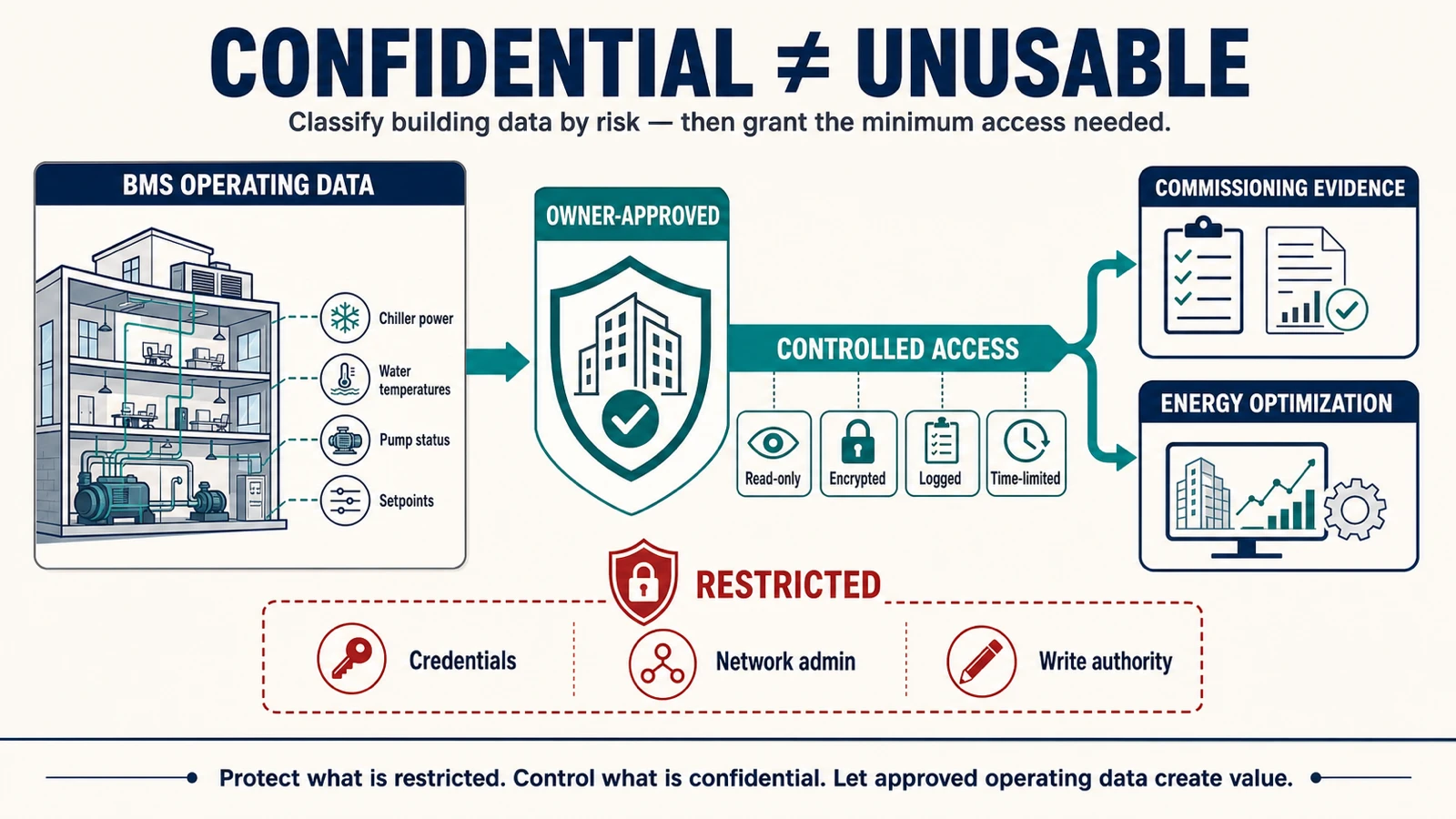
Building owners can protect sensitive systems and still authorize controlled access to the operating data needed to verify performance and reduce energy waste.
Field Notes
Building owners can protect sensitive systems and still authorize controlled access to the operating data needed to verify performance and reduce energy waste.
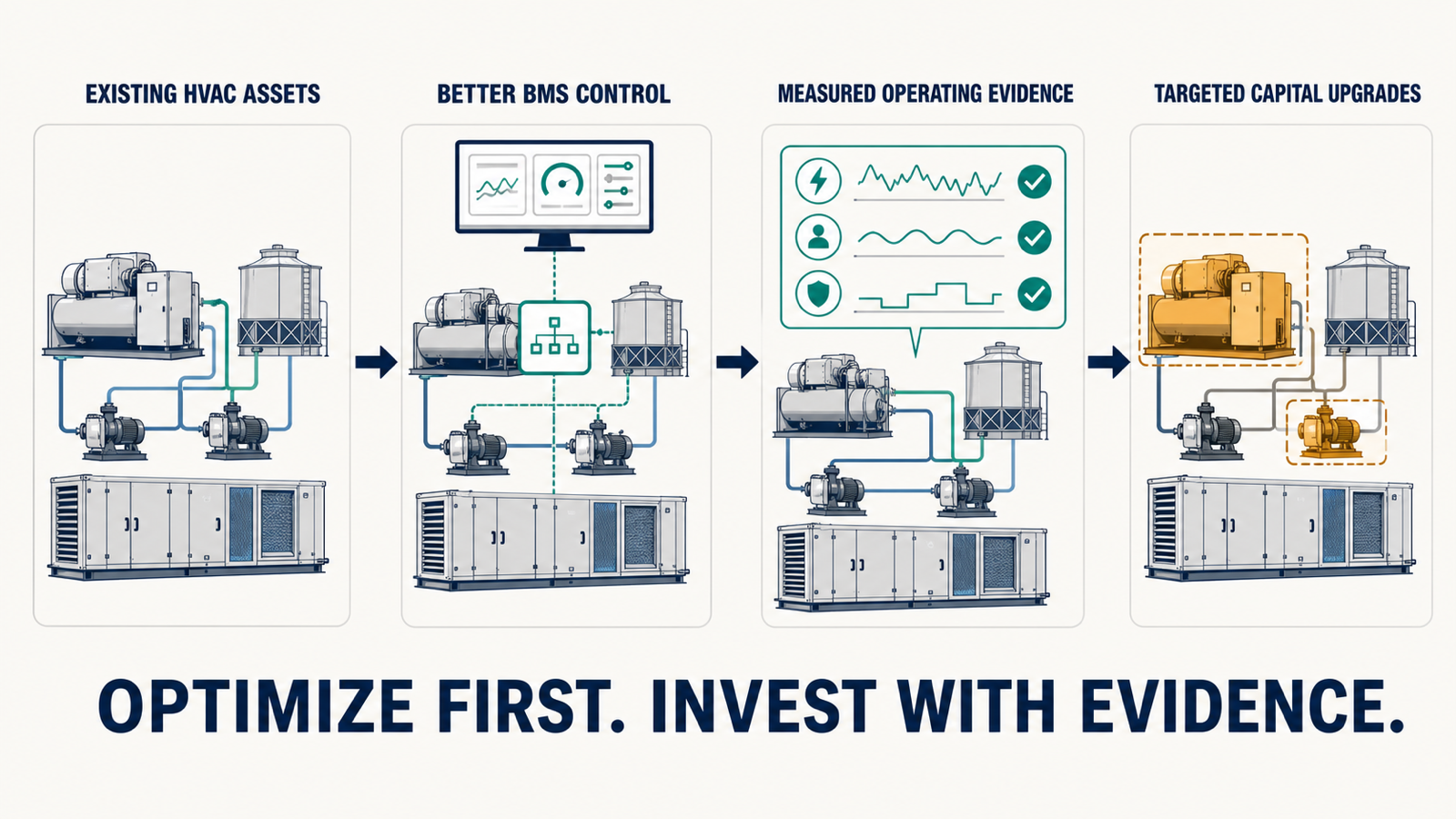
Capital constraints do not have to freeze HVAC improvement. Better control can unlock more value from existing equipment and produce better evidence for the upgrades that still matter.
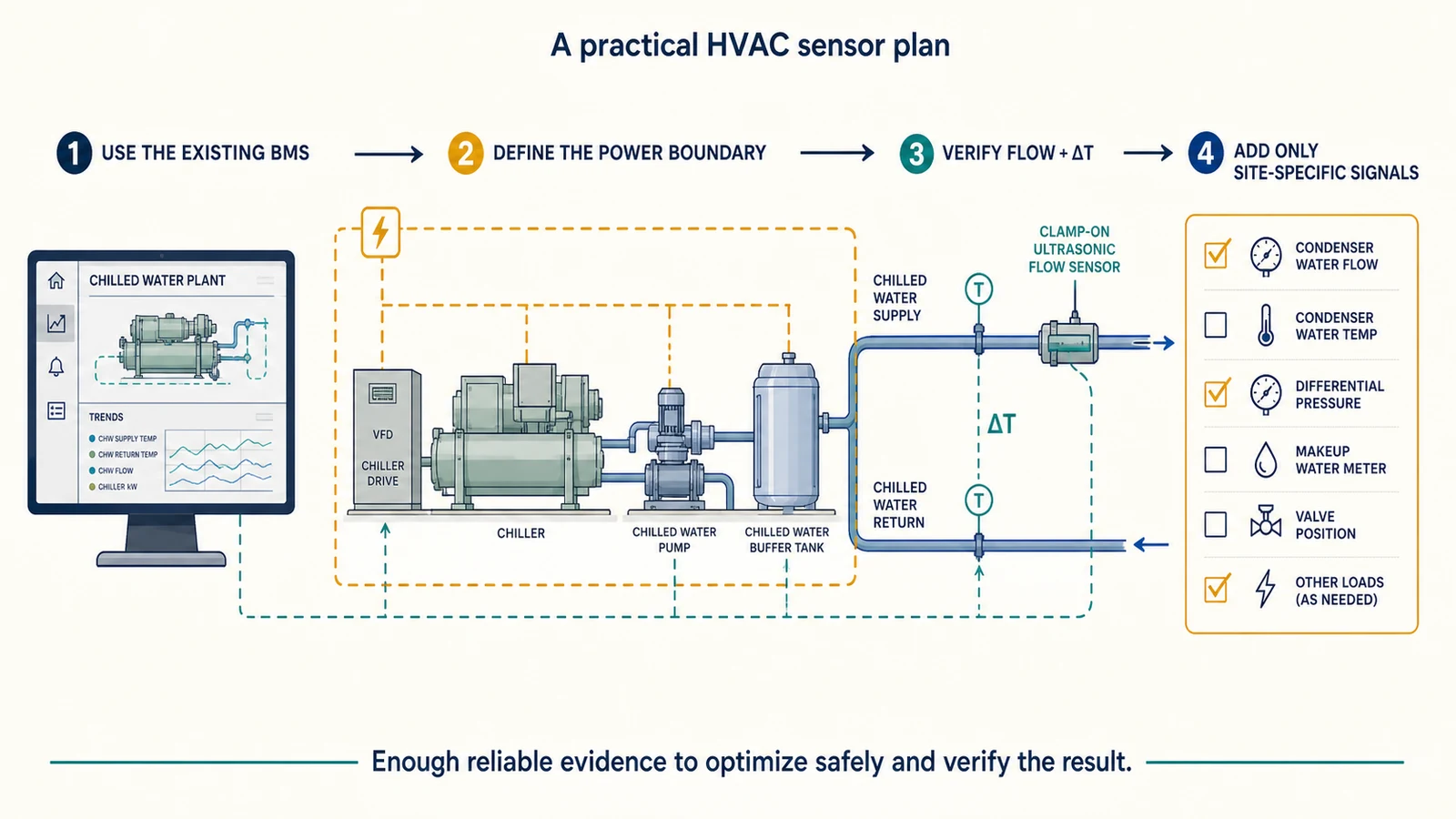
A practical HVAC sensor plan starts with existing BMS data, reliable electrical metering, verified flow, and site-specific measurement requirements.
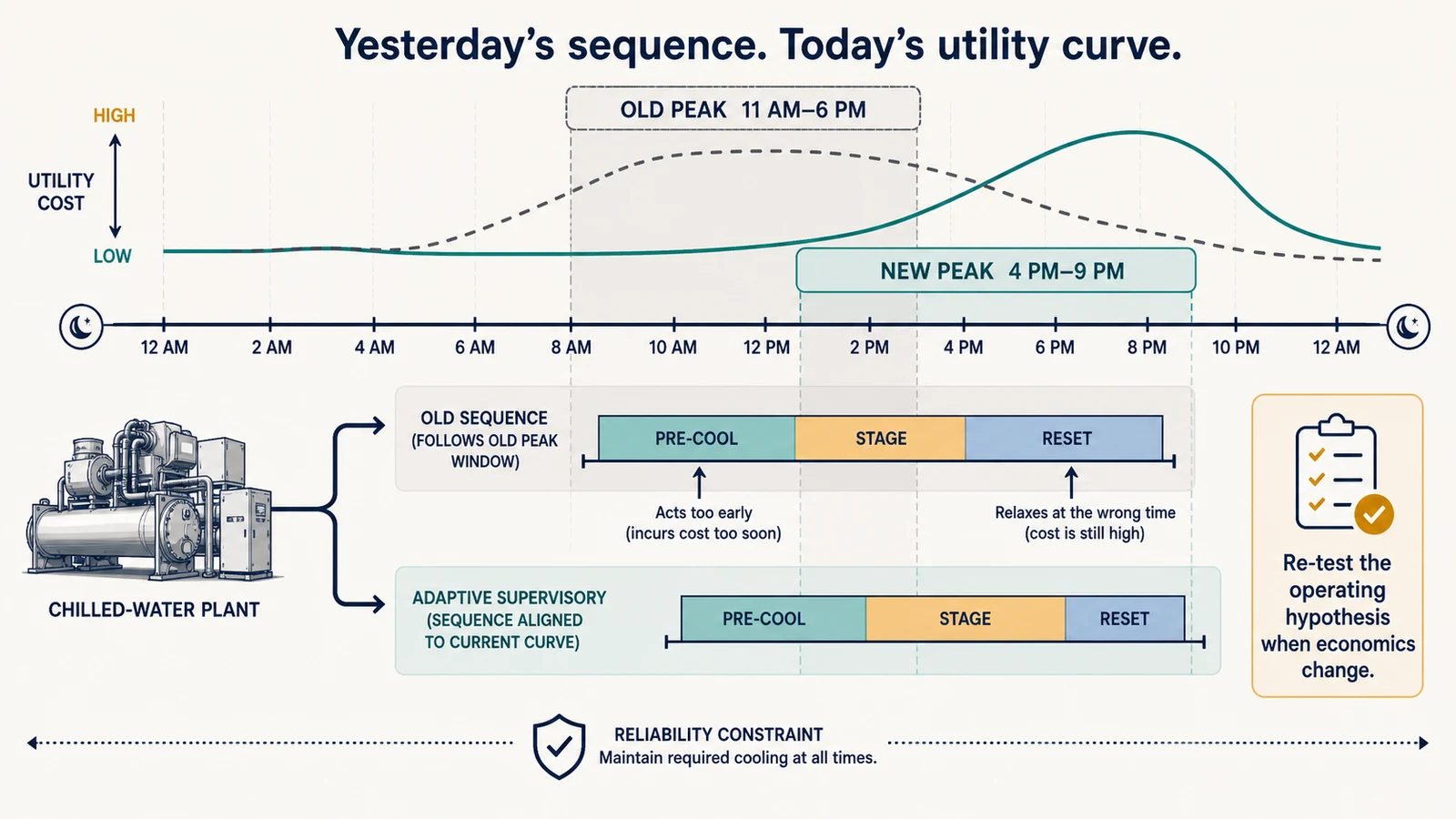
Chiller plant sequences can preserve yesterday's tariff assumptions long after utility economics change. Supervisory control can adapt within approved operating boundaries.
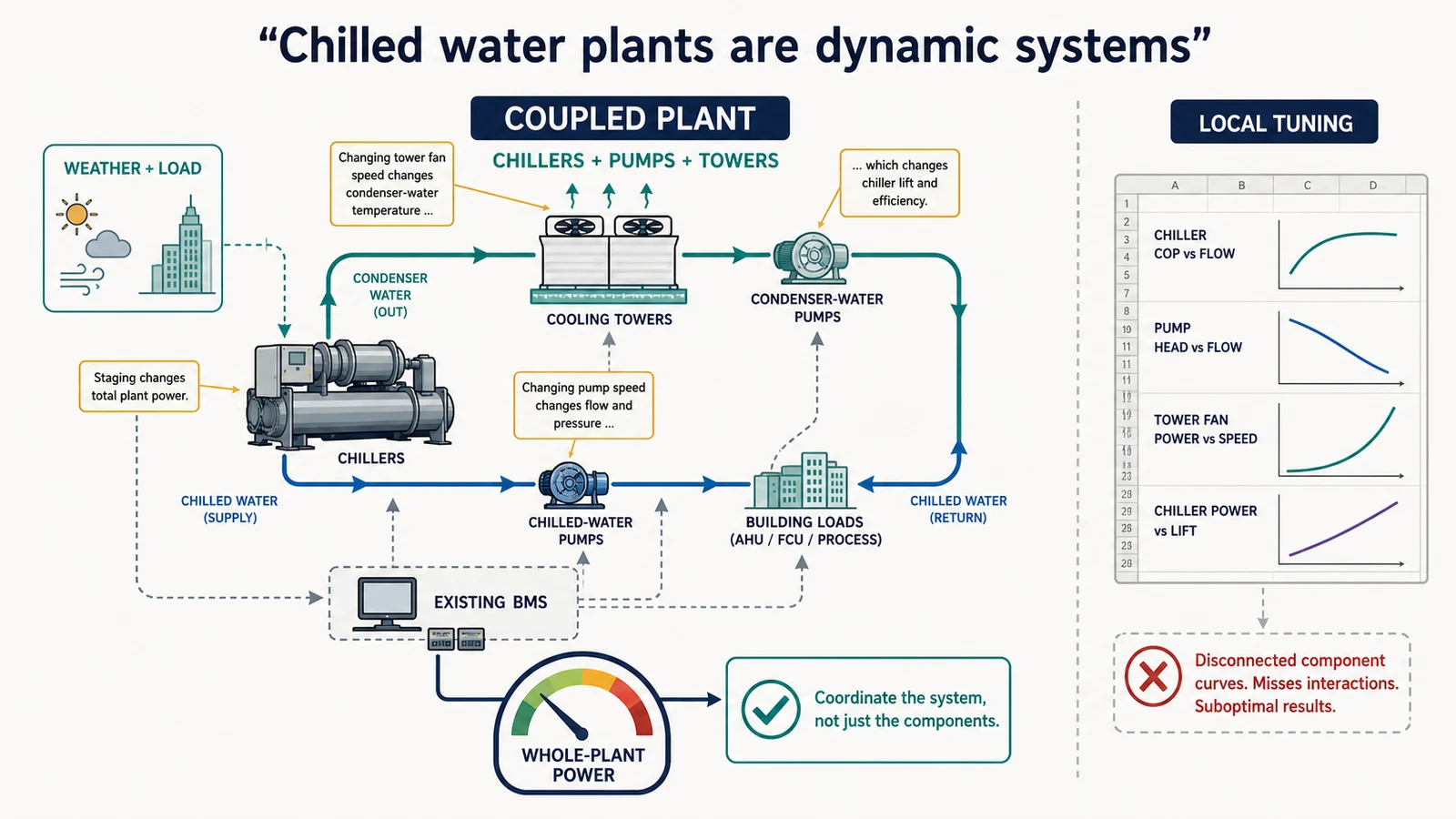
Chilled water plants are dynamic systems that need supervisory control, not isolated spreadsheet tuning.
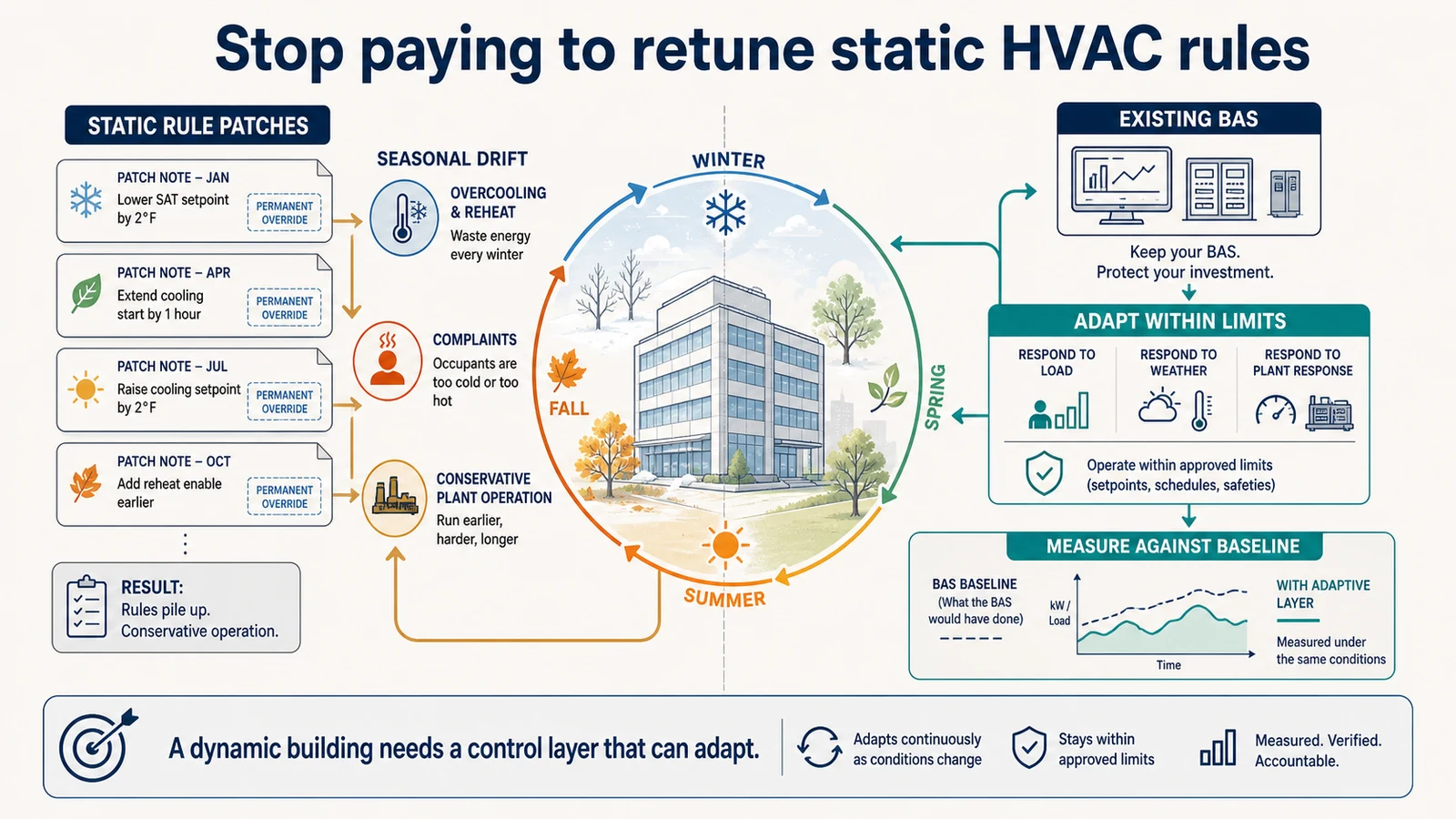
If a building keeps fighting its static BMS rules, AI supervisory control can be a better path than another round of manual retuning.
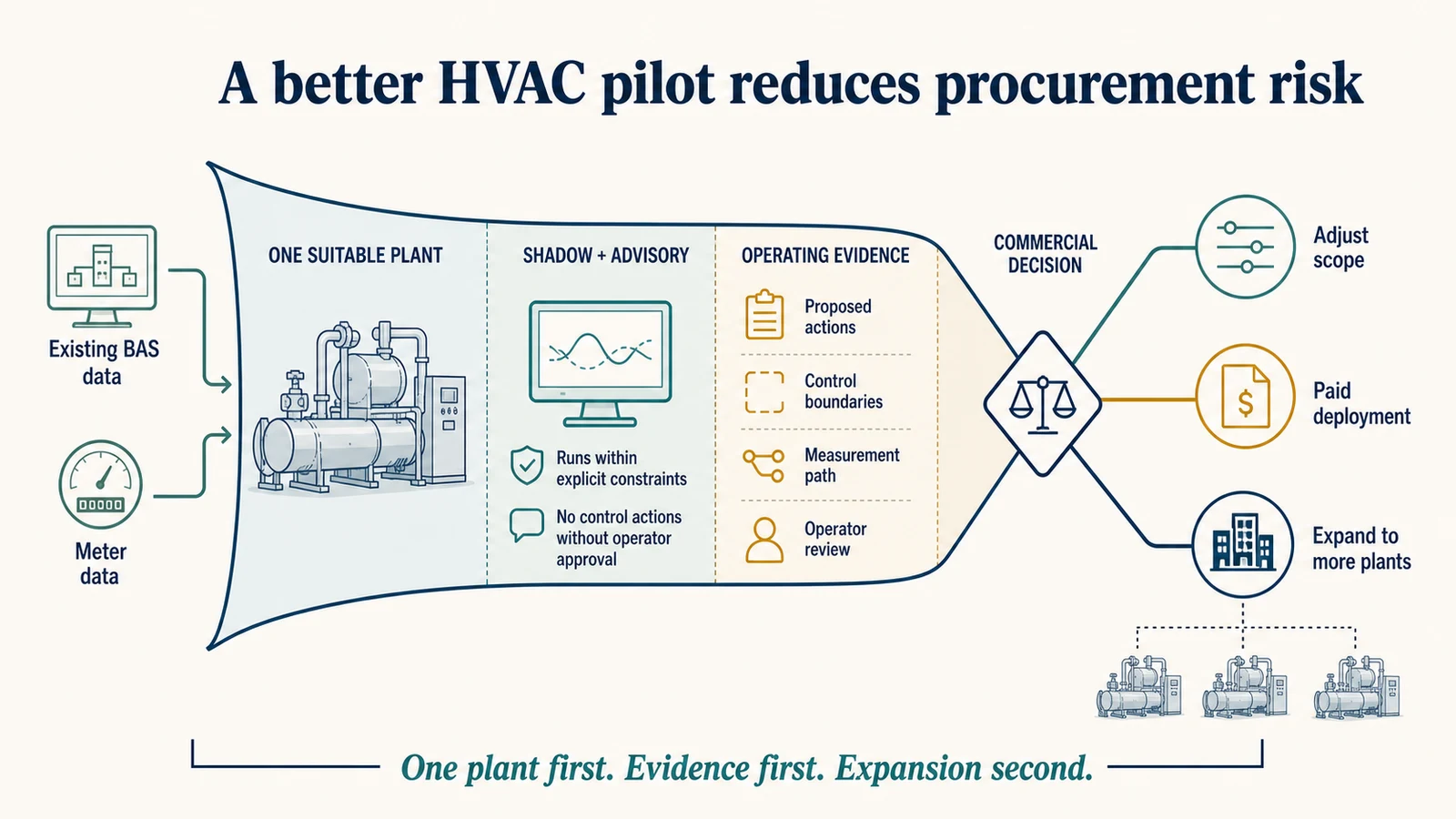
A better HVAC optimization pilot should start with one plant, prove the operating evidence, and reduce procurement risk before expansion.
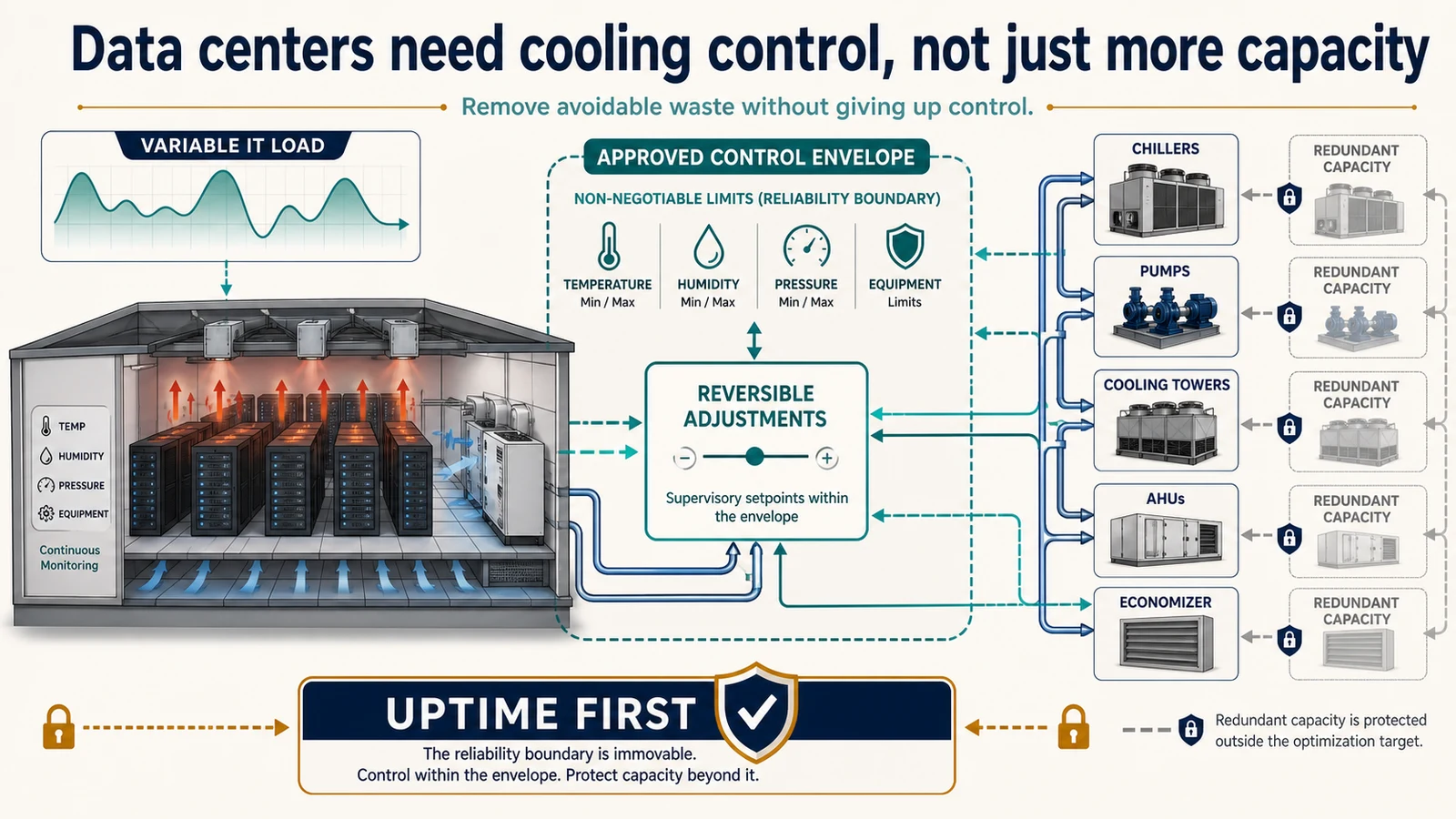
Data center cooling optimization should improve cooling operation inside an approved control envelope, so efficiency work does not compromise reliability.
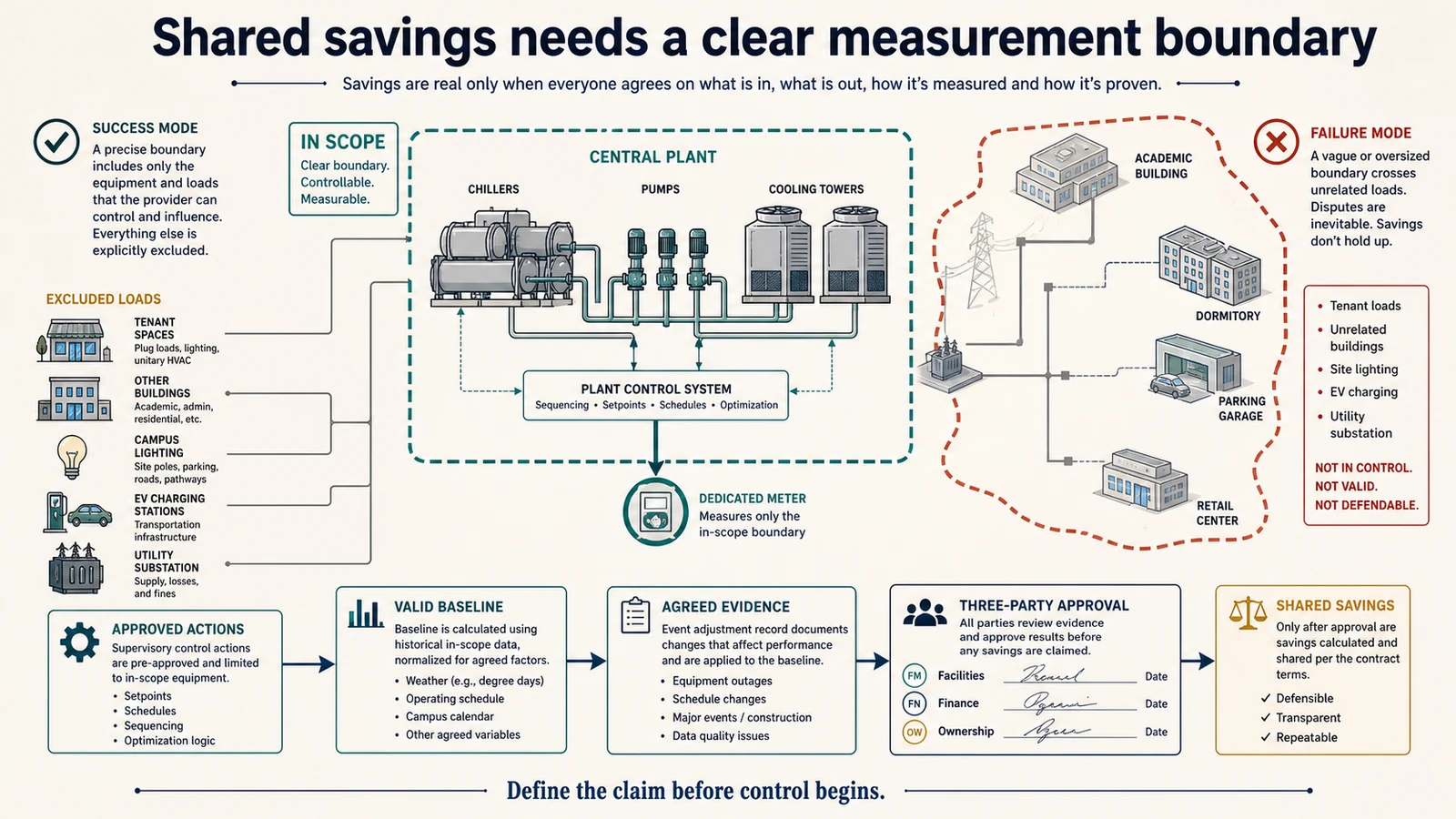
Shared-savings HVAC optimization only works when the measurement boundary is defined before control begins, so savings can be tied to approved actions and defensible evidence.
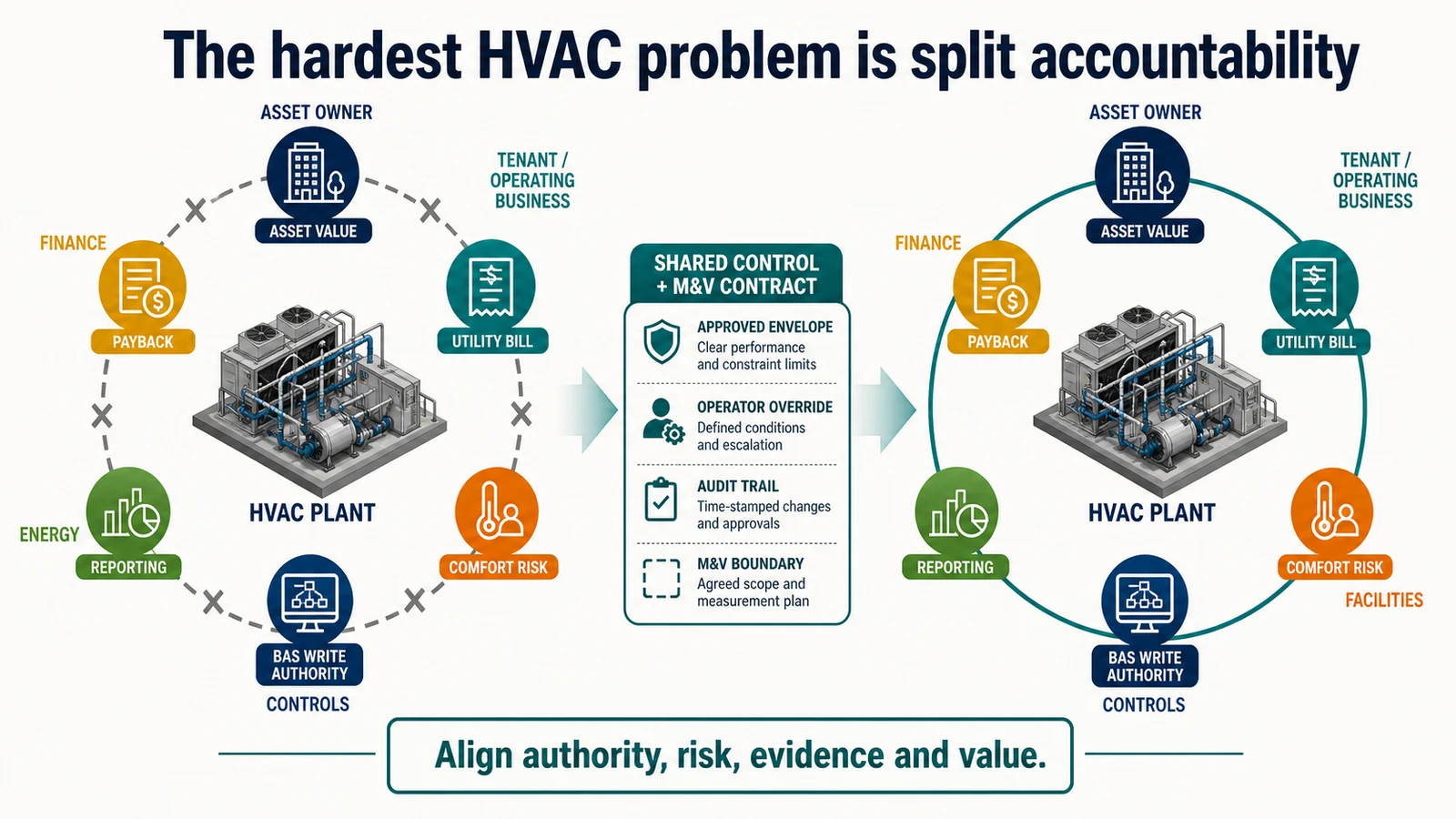
HVAC savings stall when asset ownership, utility bills, maintenance, BMS authority, and financial risk sit with different teams. Supervisory control has to be designed for that operating reality.
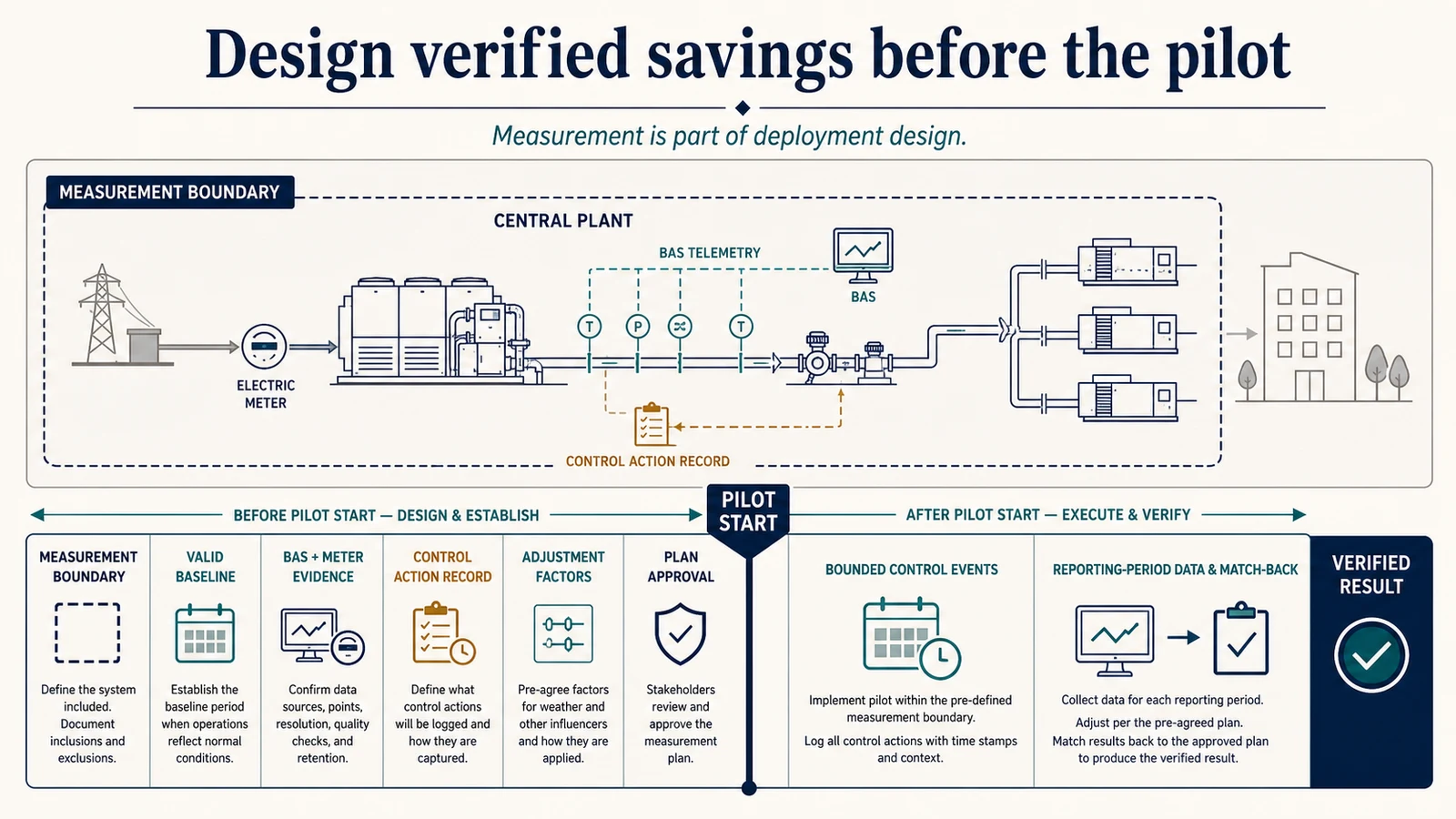
HVAC optimization pilots need a measurement path from day one: a clear boundary, valid baseline, BMS telemetry, meter evidence, and a way to connect control actions to savings.
After the 2026 DOE Better Buildings and Better Plants Summit, the next HVAC efficiency opportunity is clearer: software control that safely operates existing building hardware through the BMS.
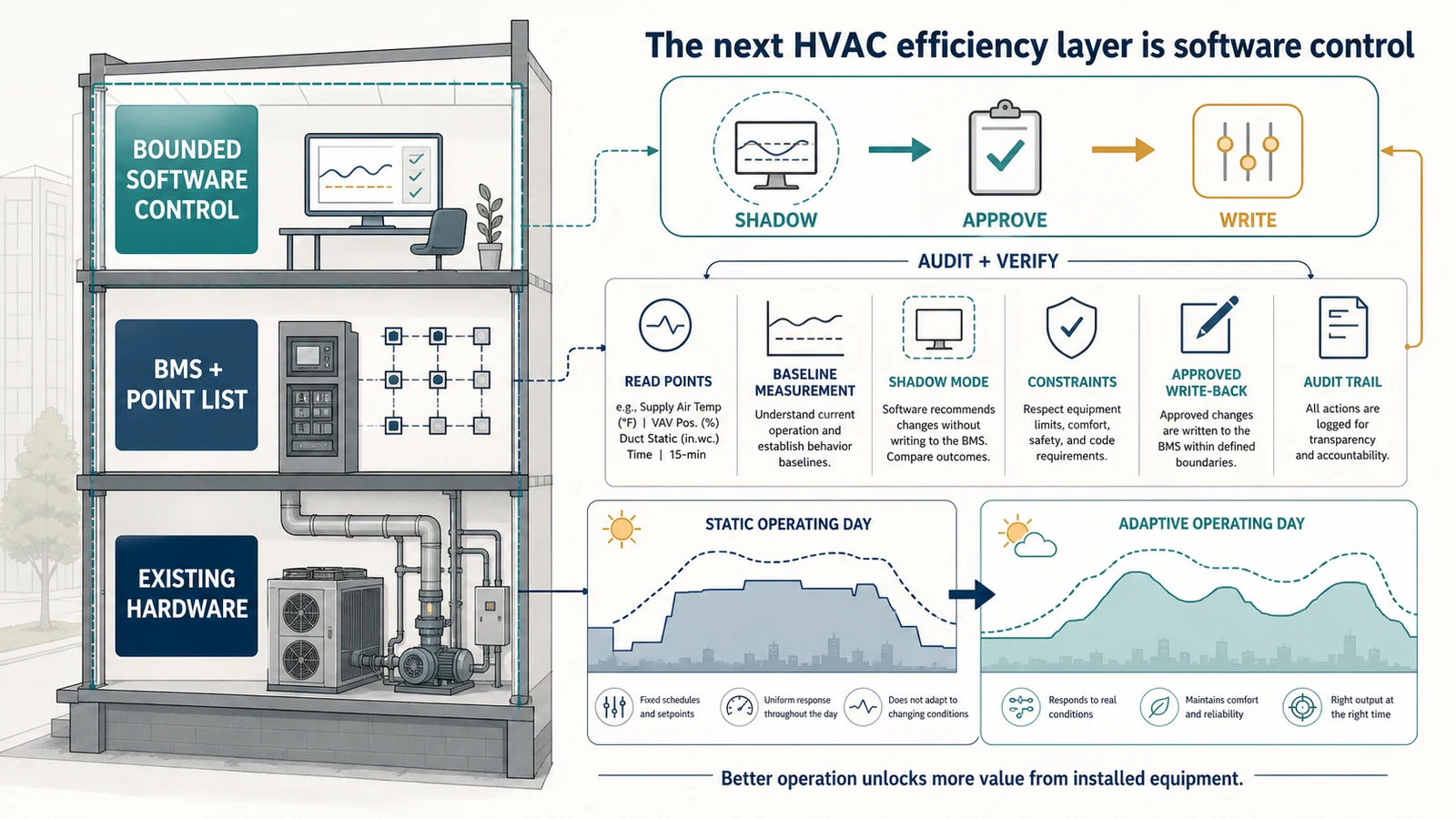
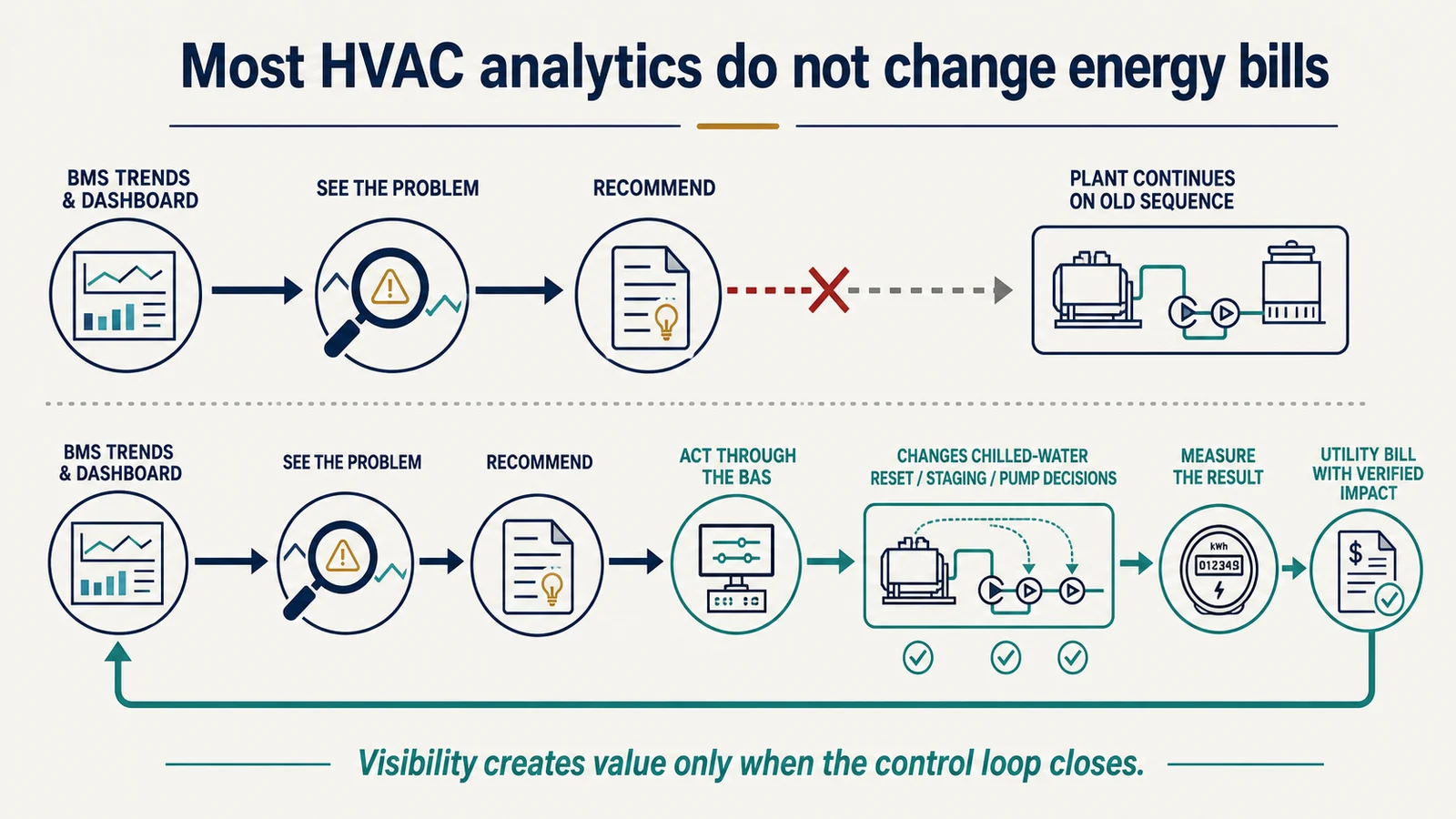
Dashboards can make HVAC inefficiency visible. Real optimization starts when software can safely change plant behavior through the existing BMS, inside an approved control envelope.
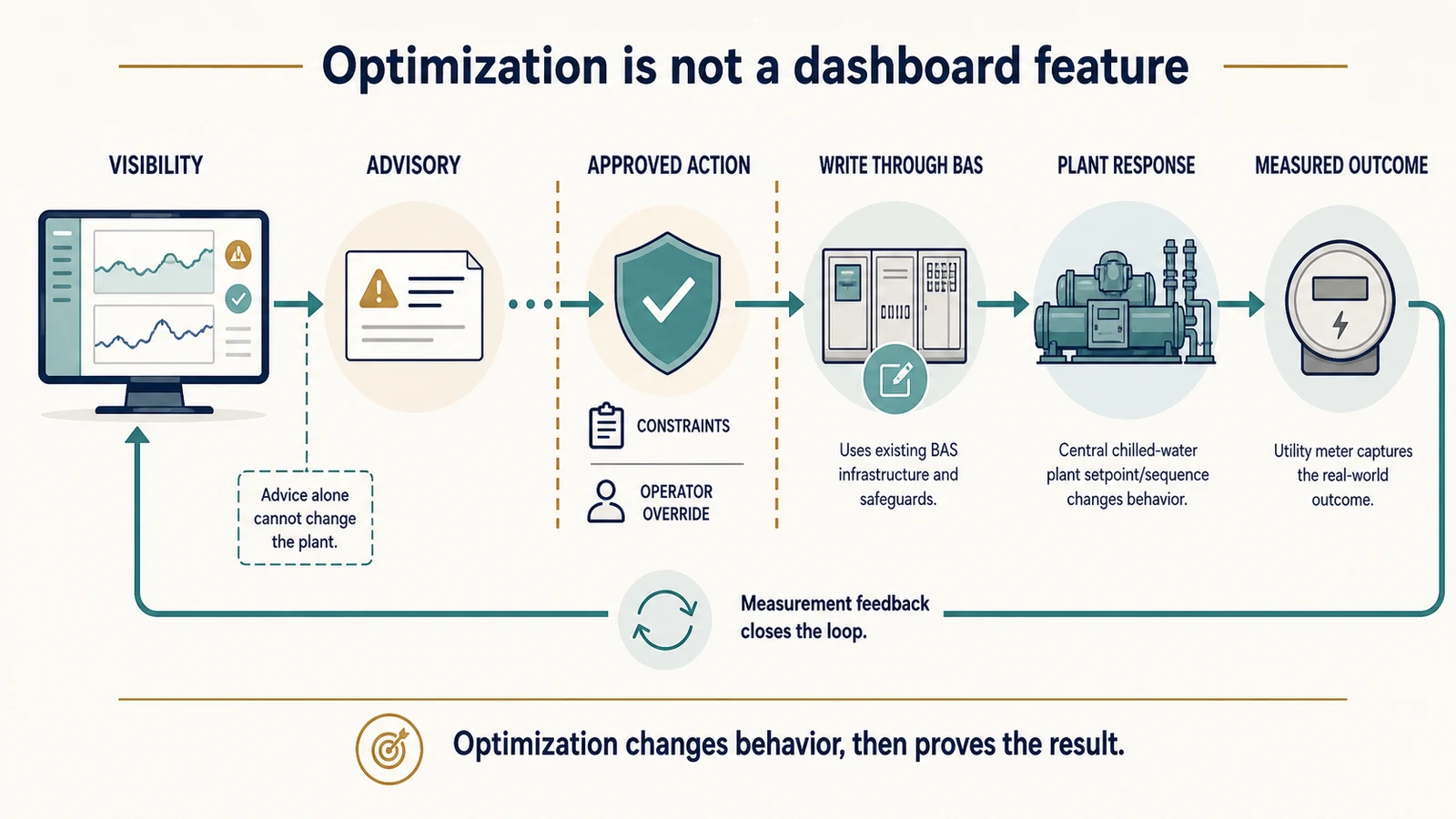
The outcome of HVAC optimization is not another dashboard. It is lower utility bills, a better-running plant, and accountability tied to measured performance.
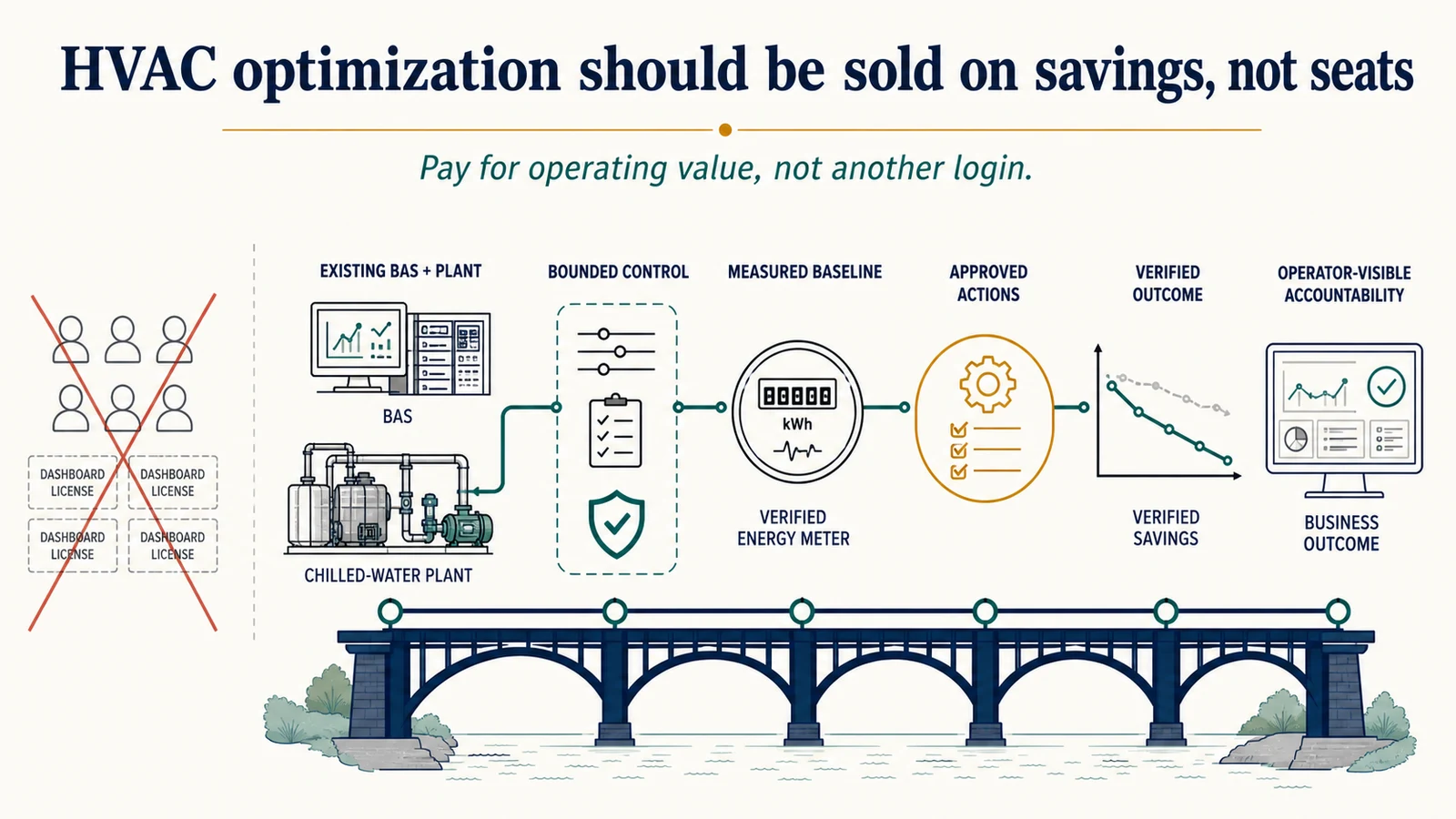
Visibility is useful, but energy bills move when recommendations become safe, accepted, operator-visible control actions.